Showing posts with label What 2 Read Wednesday. Show all posts

Wednesday, January 14, 2015

What 2 Read Wednesday:
"None of you are going to die..."
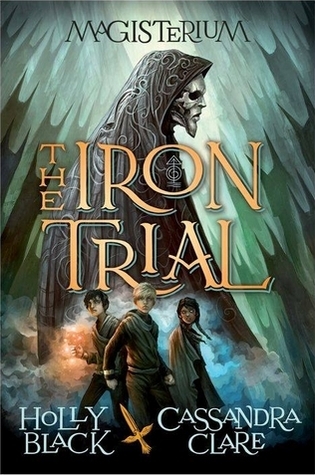
Book Review: The Iron Trial
by Holly Black and Cassandra Clare


"None of you are going to die
and you're obviously not dead."

Holly Black and Cassandra Clare, The Iron Trial
Book #1 in the Magisterium series


Having recently reread the entire Harry Potter series with SC, I was slightly skeptical of how good another book about a boy who just finds out he is magic and goes off to a special school would actually be.  J.K. Rowling has set the bar pretty high.  However, other than a few similarities (which would probably be present in ANY book about magical kids going to magic school), this book is it's own story.  

Callum Hunt is a twelve-year-old boy with a physical disability who has to go through the "iron trial," an entrance exam of sorts to the school of magic called the Magisterium.  His father, who was a mage and went through the school, encourages Callum to do all that he can to fail, because he believes the Magisterium is a terrible place, fraught with death and war.  He points to the fact that Callum's mother died just after his birth, because of a war brought on by the mages, as proof of this idea.  Though Callum does his best to fail, he is still chosen to be an apprentice by the same master who taught his mother and father, along with an orphan boy, Aaron, and a girl, Tamara.  Callum's father fights to take him away before the mages can gather them to leave, but is hauled out of the building, and Callum is taken on to the school.

Black and Clare create their own world, with their own set of magical rules, and in some cases delve where Rowling does not dare, complicating the good vs. evil narrative in fascinating ways.  For example, one of my (and SC's) favorite parts of the story is when Callum finds a wolf puppy in the woods.  This is just after a huge battle with "chaos ridden" wolves, ones who have been infected (for lack of a better word) with chaos magic, the dark and potentially evil magic that "devours."  Callum cannot help himself in rescuing this potentially dangerous pup, because he knows what it is like to grow up without a mother, and the pup (later named Havoc) not only brings Callum and his fellow apprentices closer together, but shows them all that there may be more to the magical dark area than the simple dictate "chaos wants to devour."

All in all, this is the perfect series for us to follow up a reading of Harry Potter.  It is HP on steroids, and both SC and I are now firmly enveloped into the Magisterium world.  We cannot wait until the second book,  The Copper Gauntlet, comes out next September.


**This post contains affiliate links.  Please read my disclosure statement.


Wednesday, November 5, 2014

What 2 Read Wednesday:
"...to find the brightest wisdom
one must pass through the darkest zones"
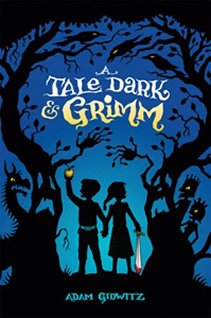
Book Review: A Tale Dark & Grimm
by Adam Gidwitz


"You see, to find the brightest wisdom one must pass through the darkest zones.  
And through the darkest zones there can be no guide.

No guide, that is, but courage."

Adam Gidwitz, A Tale Dark & Grimm


It should not come as a shock, dear reader, that SC is a huge fan of dark fantasy.  I believe I have also mentioned that it is not something I was interested in as a young reader, so it has been a learning journey as I attempt to find quality children's literature in that genre.  A few weeks ago, we stumbled across a Halloween-themed display at the bookstore, and having just finished the Elsewhere series and needing a new audiobook read-aloud, I told SC to take a look at the books on the display, read the back covers, and pick something a bit spooky.  Well, she did.  Not only is this book spooky, but creepy and grotesque as well.  And awesome and well written and wonderful.  

I was happily shocked by A Tale Dark & Grimm and Gidwitz's authorial style.  The novel is a retelling of a few of Grimm's fairytales, changed to interweave Hansel and Gretel as the main characters through each, juxtaposed with Gidwitz himself through authorial intrusion commenting on what is about to happen, or what has just happened, in the story he constantly reminds the reader he is retelling.  At first, this intrusion is comical, with Gidwitz warning the reader that the tales are "as violent and bloody as you can imagine" and stating that if that sort of thing bothers you "we should probably stop right now."  He also is constantly asking the reader to make sure there are no "little children" around because they will be scared and have nightmares.  To be sure, this book is scary, with blood and gore, death, untrustworthy and selfish kids and adults (including parents), and I would not recommend it for a child who scares easily or who might not be able to see through this to understand the intentional theme throughout.  

It is this intentional theme that eventually evolves from the comedy as the story progresses, and Gidwitz becomes a side-kick (not a guide, which he specifically points out would not bring about the desired result of wisdom and understanding), seeing the story with different eyes and bringing about the palpability of the theme.  For a children's book, there is an incredibly heavy theme, one that encompasses the brokenness of humanity, a recognition of that brokenness, purposeful change for the better, and finally a complete understanding of the brokenness in others, then forgiving and shouldering the burdens of said others in order to create a better world.  Halfway through the novel, having shown Hansel to be selfish in some of the worst ways, Gidwitz intrudes to explain:
"There is a certain kind of pain that can change you. Even the strongest sword, when placed in a raging fire, will soften and bend and change its form.  So it was with Hansel.  The fire of guilt and shame was just that hot. 
Trust me on this one. I know this from personal experience. I hope that you never will, but, since you're a person, and therefore prone to making horrible, soul-splitting mistakes, you probably will one day know what this kind of guilt and shame feels like. And when that time comes, I hope you have the strength, as Hansel had, to take advantage of the fire and reshape your own sword."
 Again, for a children's book, this is deep.  Gidwitz also writes in a way that there is no denying his intentions with his theme.  One cannot read this book and not come away with an understanding that people are broken, but people can rise above that brokenness, and that others should both forgive and help shoulder the burdens of brokenness out of love, no matter what.  He even creates a running conversation of this concept throughout the novel, breaking apart the term "understanding" and fashioning it into the concept of "under-standing...standing beneath them.  Supporting them.  Bearing their troubles and their pains on my shoulders."  It appears over and over, this concept of under-standing, and examples of what that looks like in various situations.

In the end, in spite of the gore, blood and disgust at a very accurate portrayal of humanity, this book is worth reading because of the message Gidwitz  successfully imparts.  As I said above, if your child is sensitive to these things, I would wait until he/she is a bit older, but I would definitely add this to a long list of to-be-read books for the future.  There are two other books in the series, and I have high hopes that they are just as excellent in terms of writing and intentionality.


**This post contains affiliate links.  Please read my disclosure statement.


Wednesday, October 8, 2014

What 2 Read Wednesday:
"...those people who seem the most 'normal' ..."
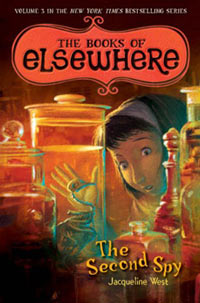
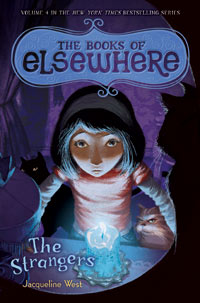
Book Review: The Books of Elsewhere series
by Jacqueline West


“It's been my experience 
that those people who seem the most 'normal' 
are in fact the most dangerous.” 
Jacqueline West, The Second Spy


Once SC and I finished the listening to the audiobooks of the entire Harry Potter series by J.K. Rowling, after contemplating starting the Lord of the Rings series but decided not yet, I stumbled upon the first book in The Books of Elsewhere series by Jacqueline West.  This is another series that has a touch of magic and fantasy, and some horror-lite akin to Coraline by Neil Gaiman, which is SC's favorite genre.  We decided to give the audiobook a try, and I was not only not disappointed, but hugely impressed with the quality of writing in these stories.  After some research, I discovered that West has won awards for her poetry, which makes sense.  She utilizes words in the Elsewhere books in a way that I have not seen/read in most contemporary children's novels.  She is a true wordsmith.

The story of the Elsewhere series is about Olive Dunwoody, an eleven-year-old girl who, along with her math professor parents, moves into an historical home whose previous owner, Ms. McMartin, has recently deceased.  Quickly after moving in, Olive notices that things in the house, which they purchased fully furnished with all of old Ms. McMartin's stuff, is a little off.  For example, when the family attempts to move some of the paintings on the wall, it is found that the paintings are oddly stuck.  Then, Olive begins to think that the painting she can see from her bedroom is moving.  After an afternoon exploring the house, where Olive discovers an intriguing pair of spectacles, and learns that not only are the paintings moving, but while wearing the spectacles she can travel into the paintings to a place called Elsewhere.  However, Elsewhere isn't the quiet place it seems to be, and Olive realizes that something, or someone, is not pleased that her family has taken ownership of the McMartin house.  Each book in the series builds on Olive uncovering secrets of the house, and the McMartin family, as she tries to outwit and defeat an evil that has prevailed for too long on Linden Street. 

I would recommend these novels to older elementary children who are not easily spooked.  However, if purchasing the audiobooks read by Lexi Fridell, she has such a sweet voice that I think some of the spook is lost by her reading it, and a younger elementary child who has a firm grip on fantasy vs. reality would love it.


**This post contains affiliate links.  Please read my disclosure statement.


Tuesday, August 13, 2013

"The only tolerable state is having just written."
Happy 1st Blogiversary!

“It's hell writing and it's hell not writing. 
The only tolerable state is having just written.”
-Robert Hass


Today marks the first "blogiversary" of Proverbs 2 Pursuit :: Wisdom.  As I look back on the last year and some of the posts I have made, I realize that I have grown in ways I did not expect.  Initially, the goal of this blog was to focus on my breakdown and learning about education, specifically as it relates to SC, and to chronicle our baby steps into homeschooling.  However, though we have done some of this, it has also been a place to talk about struggles with SC, to share the blessings God has bestowed upon our family, and a place to hash out what being a parent to SC really should look like, considering the uniqueness God created within her.  

I love what the blog has become, and while when I first started I was consumed with posting regularly in blog hops and getting my voice out there, I am much less stressed if I miss an "appointment," because I just don't have anything of quality to contribute that day.  I am okay if I don't post for a week because we were busy, or on vacation, or if my post is mostly pictures, or a brief bit of thankfulness.  I think over the past year, the blog has become less about "having a blog" and more a representation of me and our life, which is exactly what I want it to be.

So, in looking back today (which is Top Ten Tuesday), I wanted to highlight ten of my most-read/commented-upon posts, and I hope you enjoy them.


2. Thankful Thursday: 
"How Not to Have to [Wash] the Dishes"

3. Top Ten Tuesday:
PBS Kids Shows

4. Top Ten Tuesday:
"Home is home, though it be never so homely."

5. Top Ten Tuesday:
"Books and movies are like apples and oranges."

6. 2013-2014: K5/1st Curriculum:
"Look what a lot of things there are to learn..."

7. What 2 Read Wednesday:
"She was expecting something empowering."
Book Review: What We Talk About When We Talk About Anne Frank
stories by Nathan Englander

8. What 2 Read Wednesday:
"is the fleeting jolt of meaning that art gives us valuable?"
Book Review: The Fault in Our Stars by John Green


Which of these posts was your favorite to read, or is it one that I have not listed?  Leave a comment below, then check out some other Top Ten Tuesday posts here:

Many Little Blessings

Wednesday, August 7, 2013

What 2 Read Wednesday:
"The eyes are the windows of the soul...."
Book Review: From the Mixed-Up Files of
Mrs. Basil E. Frankweiler
by E.L. Konigsburg


"The eyes are the windows of the soul.... 
If someone was to look into your eyes, 
what would you want them to see?"
E.L. Konigsburg, From the Mixed-Up Files of Mrs. Basil E. Frankweiler


When I was much younger (probably late elementary, though I honestly don't remember), I read a fantastical book about a girl and her brother who ran away to the Metropolitan Museum of Art in New York City and attempted to solve a mystery about whether or not Michelangelo created a specific angel statute.  It was a fabulous book, but in those days, I read so much, checking the maximum number of books from the library on a weekly basis, that eventually I forgot about it.  

However, as I have started reading more than just picture books to SC, I came across this book with a funny, long name called From the Mixed-Up Files of Mrs. Basil E. Frankweiler and everything came back to me.  I was so excited to share this book with SC, and was even more excited when we found out that SC and I could travel along with AC to New York City, and could visit the very museum that the main characters stayed it.

The 1968 Newbery Award winning novel From the Mixed-Up Files of Mrs. Basil E. Frankweiler tells the story of 12 year old Claudia, who feels unappreciated as the oldest of four children, and decides that what she needs to do is run away.  However, instead of running away to just anywhere, she decides to run away in style, to "a large place, a comfortable place, an indoor place, and a beautiful place" (pg. 5): the Metropolitan Museum of Art in New York City.  Being a planner, and understanding it might take some money to run away, she brings along her 9 year old brother Jaime, who has "saved almost every penny he got" (pg.6).

Upon arrival at the Met, Claudia and Jamie create a plan for how they will stay inside the building after closing, and scope out where they will sleep for the night.  The blend in with school groups because the tours are interesting, and to get free food in the cafeteria.  They hide in the bathrooms from the night guards, and sleep in a bed in the English Renaissance area that allegedly was the site of a grisly murder.  On the second day of their stay, they discover "The Angel," a marble statue the Museum acquired for only a few hundred dollars, that it has been speculated was carved by Michelangelo   Claudia decides that her and Jamie's purpose in running away has now become to discover whether or not Michelangelo was the artist, and to prove it to those running the Museum.  The rest of the novel follows their investigation and adventures, and it was thrilling to read, even all these years later.  SC loved it, as well.

I would recommend this novel as a read aloud for children who can sit for longer periods of time, or to be read alone by older elementary or middle school aged children.  However, I think that this story is fabulous for all ages and even adults can take something from it. 


Since we read From the Mixed-Up Files of Mrs. Basil E. Frankweiler in preparation for heading to New York City, I wanted to highlight some of the picture books we also read before we headed out on this trip.  Our favorites were The Other Side of Town by Jon Agee and New York, New York! The Big Apple from A to Z by Laura Krauss Melmed, but we also checked out from the library and enjoyed all of those here.


**This post contains affiliate links.  Please read my disclosure statement.

Wednesday, June 26, 2013

What 2 Read Wednesday:
"The sun kept on with its slipping away..."
Tell the Wolves I'm Home
by Carol Rifka Brunt


"The sun kept on with its slipping away, 
and I thought how many small good things in the world might be resting 
on the shoulders of something terrible."

-Carol Rifka Brunt, Tell the Wolves I'm Home, pg. 233


Tell the Wolves I'm Home is the first novel by author Carol Rifka Brunt.  It was listed on many "best of" lists in 2012, and came out in paperback this month.  I picked up a signed copy at Target last week because the cover jumped out at me and I have to say it was a worthy purchase.

Tell the Wolves I'm Home is the story of fourteen-year-old June as she attempts to cope with the death of her uncle and closest confidant, famous painter Finn Weiss, by AIDS in the spring of 1987.  Though touted as a "coming-of-age" story, I felt that this novel was so much more than that.  It is the struggle of a young girl to understand what love really is, and she gets a first-hand look at the many types and the sacrifices that those in love make for their lovers.  There are a few pairs of characters juxtaposed with each other, including Finn, whom the reader barely meets before his death, and his boyfriend Toby, June and her older sister Greta, as well as June's parents, who are both tax accountants dealing with their busiest time of year.  The story centers around June getting to know Toby, a stranger to June until she sees him for the first time at Finn's funeral and is told by her older sister that he is Finn's "murderer."  

June is also right at the age where she is not quite a child, but not yet an young adult.  Her perceptions of the world are changing, and she struggles to figure out what her relationship should be with each member of her family.  She has always felt like she does not fit in, and Finn was the one who made her feel special.  With him gone, she is bereft.  Just as Toby begins to fill the hole left by Finn, June begins to wonder if he spends time with her for herself, or because Finn asked him to.  She relates herself to a falconer whose birds fail to return.  She thinks
"I used to think maybe I wanted to become a falconer, and now I'm sure of it, because I need to figure out the secret. I need to work out how to keep things flying back to me instead of always flying away."
Her sister, Greta, is also going through a "coming-of-age," though it is a transition from young adult to adult, with real life goals and expectations.  She wavers between being the loving sister who is excited to share life with June to a mean, typical teenager who cannot control her emotions.  She excels at musical theatre, so much so that she has been invited to audition for a Broadway role, but the idea of being on her own and responsible for her life scares her.  She begins to drink in a way that is an obvious cry for help to June, who doesn't know how to respond as she deals with her own fairly grown-up issues with Toby.

Brunt also weaves a beautiful tale of a family coming to grips with the reality of AIDS in a time when no one in the world really understands the disease.  The fear of catching the disease, but no one really knowing how it was transmitted, is palpable.  As this twines through the story of love, it adds depth to the heartache and jealousy the characters are dealing with.  

I liked this book very much after finishing it, but liked it even more as I thought back at the way Brunt crafted the tale so expertly.  Be prepared to shed tears as you are drawn in to the world of June Elbus.  I would recommend this book to mature, older teens and adults.  However, I do think it would be helpful for the reader to have an understanding of what the environment surrounding the AIDS epidemic in the late 1980s was like, or much of the story will be lost. I also think this is a novel that both men and women can really get into, even though the main character is a young girl.


**This post contains affiliate links.  Please read my disclosure statement.


Friday, June 7, 2013

What 2 Read Wednesday:
"Human experience is far too varied."
Book Review: The Madness Underneath
by Maureen Johnson &
The Madman's Daughter by Megan Shepherd

“There is no normal. I've never met a normal person. The concept is flawed. 
It implies that there is only one way people are supposed to be, 
and that can't possible be true. 
Human experience is far too varied.” 
― Maureen Johnson, The Madness Underneath


I know that I have missed What 2 Read Wednesday for the past two months, but I hope this post makes up for it.  Over the course of my blogging hiatus due to travels, I was able to read a large number of books, including two whole series, as well as a few that are part of other series.  Instead of only mentioning one for What 2 Read Wednesday, I wanted to give my brief review of all of them.  All of them are "young adult" fiction novels, but they do range from excellent examples of the genre (and fiction in general) to mindless frivolity that only serves to waste time on a ten hour flight.


This first review is going to be awkward because it is the second book in a series and the first book really needs to be read for the second to make sense, and I don't want to spoil too much of either.  

The Madness Underneath by Maureen Johnson is the second in Johnson's "Shades of London" series, about Rory Devereaux.  She is a teenage girl who stumbles upon (in the first novel, The Name of the Star) a Jack-the-Ripper copycat killer during her first year at a London boarding school, which results in her near death.  This may all seem relatively cut-and-dry, but what makes Johnson's plot unique is the inclusion of the "Shades," a small group of ghost hunters that have an integral part to the story.  

In The Madness Underneath, due to Rory's experiences in the first novel, she has no one to turn to but the Shades as she attempts to deal with the aftermath of her prior experiences.  She is horribly confused, and feels the Shades are the only ones who will understand.  At one point she tells herself:
"You can't curl up on the sofa and deny life forever. Life is always going to be a series of ouch-making moments, and the question was, was i going to go all fetal position, or was I going to woman up?"
As Rory grows closer to the members of the Shades, she feels less and less comfortable at the boarding school.  She thinks
"I felt like I was faking all of this, like I was playing the part of a student. I had the costume and the props, but I didn't really belong here. I'd pinned notes on the stupid corkboard backing of my desk, and I'd highlighted things...But it was all so meaningless."
Then, a new string of deaths begins in London, and Rory and the Shades need to figure out what is going on and why.  As the plot begins to spiral out of control, Johnson ends the novel on such a cliff hanger that I would have had a moment Ã  la Pat in Silver Linings Playbook had I not been on an airplane.  I immediately looked up to see that the third novel won't be out until 2014, and have resigned myself to wait.  

The Madness Underneath is a powerful novel that draws the reader in unexpectedly and easily, which makes the ending that much more difficult to bear.  I am very excited to read books three and four in the series.  Maureen Johnson is a master at her craft, and I would recommend this book highly to anyone over the age of thirteen or so.


Megan Shepherd's work The Madman's Daughter is a novel of epic proportions, as it is a retelling of H.G. Well's The Island of Dr. Moreau, only this version of events is told from the point of view of an invented daughter.  

Juliet is a sixteen-year-old girl who is struggling to make a life for herself in Victorian London after heinous accusations that lead to the discrediting of her father's work and his untimely death, and then the subsequent death of her mother.  Working as a maid at the University where her father was once a prominent physician, Juliet faces sure scandal when she fights off an attacker, but luckily stumbles upon her father's assistant, an old family friend named Montgomery.   

Juliet finds out that her father is still alive and insists on accompanying Montgomery to the remote island where Dr. Moreau is living and working.  Arriving at the island (with a castaway named Edward in tow), Juliet embarks on an attempt to understand whether her father was justly accused or not, and learns that things are not exactly as they seem to be.  At one point Juliet hears, beautifully, 
"the rising and falling cadence of words, carried on the wind, spoken in a language other than human.”  
As her father tries to control his creations, a monster is wreaking havoc and killing them off one by one, and it is up to Juliet to figure out how to stop it.

I am personally not a huge fan of H.G. Wells, though of all his works, I really like The Island of Dr. Moreau.  However, I think what Shepherd has created with The Madman's Daughter rivals Wells' work in every way.  Her writing is phenomenal, and as scientific and gruesome as Wells' own, and the excitement and emotional attachment that Wells pulls from his readers Shepherd manages to exceed.  This is to be the first in a series of novels about Juliet, her father and his creations, and I would also highly recommend it to older teens and adults.


This next review will be brief, as I am not going to highly recommend any of the books in this series, but I thought I should at least mention them because they are fairly popular.  The "Beautiful Creatures" series by Kami Garcia and Margaret Stohl consists of four novels and one novella, Beautiful Creatures, Beautiful Darkness, Dream Dark, Beautiful Chaos, and Beautiful Redemption.  

The first novel, Beautiful Creatures was entertaining enough for me to read the second novel, but it would fit into the category of mindless frivolity to make the ten hour flight pass.  The story follows Ethan and Lena as they try to figure out just what they are to each other and what has brought them together.  Lena is a "caster," and Ethan seems to be human, but some force seems to be drawing them to each other.  This series is a star-crossed teen romance that, in my opinion, is trying too hard to be the next Twilight (which I thought was mediocre, by the way) and there are too many characters crammed in with very little development.  By the third book Ethan becomes whiny and the ancillary relationship between Lena's cousin (also a "caster") and Ethan's friend Link (who, at this point, has become a warewolf mixed-breed) is much more interesting.  There is also too much typical high school drama thrown into the mix, in what can only be an attempt by the authors to make the reader relate to the story.  

I would not recommend this series except to the biggest Twilight fans, but be prepared to wade through the muck of details the authors try to cram in throughout the plot.

I am running out of steam for writing reviews, and I still have two more series to go, so I will be quick.  Can you believe I read all these books in the past two months?


Clockwork Angel, Clockwork Prince, and Clockwork Princess by Cassandra Clare are the books in the "Infernal Devices" series about a race of people called "Shadowhunters" who fight demons in order to keep humans safe.  This particular series is set in the Victorian Era and centers on three young people, Tessa, Will and Jem.  It chronicles their battle with Mortmain, an evil man who has created the Infernal Devices in an attempt to wipe-out the Shadowhunter race.  There is also a love triangle that threatens throughout between Tessa and the two boys, which further complicates matters.
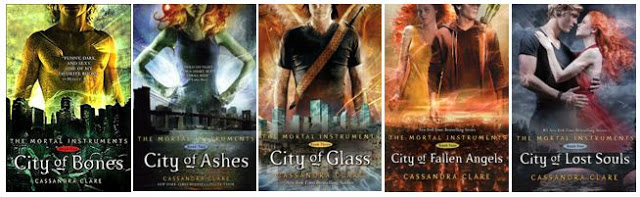

Cassandra Clare has also written a modern series about the Shadowhunters called "The Mortal Instruments," which includes City of Bones, City of Ashes, City of Glass, City of Fallen Angels, and City of Lost Souls.  There is also a sixth book that will be released in April 2014.  This series centers around Shadowhunters that are descended from those in the "Infernal Devices" series, but have their own set of problems (and relationships) to deal with.

Overall, I really like Cassandra Clare's writing.  She includes just enough detail about the history of her fictional races of people to make it interesting without bogging the plot down.  I also like how at the beginning of each chapter she has chosen an epigram from classic poetry or literature that relates to the story she has crafted.  For example, in Clockwork Princess, she took a stanza from Algernon Charles Swinburne's poem "Laus Veneris"
"Yea, though God search it warily enough,
There is not one sound thing in all thereof;
Though he search all my veins through, searching them
He shall find nothing whole therein but love."
The choice of this stanza is the perfect setup for the chapter that follows, without being cheesy or kitschy.  

At this point, having read the entire "Infernal Devices" series, but only most of "The Mortal Instruments," I prefer the former.  I felt that the characters were more developed and I personally have a fondness for historical fiction.  However, I reserve the right to change my preference after I read the final novel in "The Mortal Instruments" series.  I would recommend both of these series to older teens and adults.  Shadowhunting is a messy business, so there are some gory scenes, and some of the intricacies of the relationships might be more than a younger teen can fully comprehend.

Here are direct links to some of the books I recommended today.  Check them out and then share your thoughts below with a comment.


**This post contains affiliate links.  Please read my disclosure statement.


Wednesday, January 23, 2013

What 2 Read Wednesday:
"is the fleeting jolt of meaning
that art gives us valuable?"
Book Review: The Fault in Our Stars by John Green


"Given the final futility of our struggle, 
is the fleeting jolt of meaning that art gives us valuable? 
Or is the only value in passing the time as comfortably as possible?"
John Green, The Fault in Our Stars


John Green's latest young adult novel, The Fault in Our Stars, is the story of Hazel Grace Lancaster, a sixteen-year-old girl living with thyroid cancer, and Augustus Waters, the boy she meets during a reluctant trip to a support group for children with cancer.  Like others of John Green's young adult novels, though the characters in this book are teenagers, the book is heavy and filled with adult emotions.  Hazel and Augustus develop an intimate and interesting relationship based on their compatibilities, which includes Augustus giving Hazel his "wish" to go to Amsterdam to visit the author of a book about a young girl with cancer.

I feel that I cannot explain anymore about the plot without giving the ending away, and it is imperative to read the book through before encountering the ending.  Green is a masterful relationship craftsman, and his writing evokes an emotional response suitable for the events of the story.  This story is not about a typical teenage romance, though if the main characters did not have cancer, and had not already been made painfully aware of the brevity of life, that is exactly what it might be.  However, they are who they are.  At one point Augustus tells Hazel 
"I am in love with you, and I know that love is just a shout into the void, and that oblivion is inevitable, and that we’re all doomed and that there will come a day when all our labor has been returned to dust, and I know the sun will swallow the only earth we’ll ever have, and I am in love with you."  
This is a story of star-crossed love that is more real than Romeo and Juliet ever could hope to be, and yet, though the novel ends in truth and reality, I closed the book with a feeling of satisfaction.

I would recommend this book to both mature, older teenagers, as well as adults.  This is a difficult book, due to the subjet matter, but it is worth every moment spent reading it.


**This post contains affiliate links.  Please read my disclosure statement.


Wednesday, December 26, 2012

What 2 Read Wednesday:
"She was expecting something empowering."
Book Review: What We Talk About When We Talk About Anne Frank
stories by Nathan Englander


"Deb looks crestfallen.  
She was expecting something empowering.  
Some story with which to educate Trevor, 
to reconfirm her belief in the humanity that, from inhumanity, forms."


This book is a collection of eight short stories, of which I am usually not an interested reader.  I don't know if it is the stigma that, for me, developed from reading short stories throughout school, that it is "fake" reading, of minimal value, and that a real reader reads long works, novels and the like.  How could a writer create depth with so few words?  So I honestly have to disclose that I picked What We Talk About When We Talk About Anne Frank up without realizing it was a book of short stories.  However, having a few plane trips on the schedule, I brought it along and found myself immersed in remarkably deep stories that forced me to think in ways I did not expect, and think about things that might seem unrelated to the story Englander is telling.

Going into the title story my knowledge of Judaism was limited to what I had learned in elementary school when reading Anne Frank: The Diary of a Young Girl, plus various television shows or movies and brief mentions of Jewish characters in books that were not really about those characters.  I thought I really understood the difference between Christians and Jews - I mean, Christians believe that Christ is the Messiah, Jews do not, and that is the end.  Right?  No, not really; it is so much more than that.  

In "What We Talk About When We Talk About Anne Frank," two Jewish couples, Deb and the narrator, Americans who live in Florida, and Mark and Lauren, American ex-pats who live in Jerusalem, spend an evening catching up with each other's lives and trying to determine whether the ex-pats have better lives because they are "more" Jewish having moved to Jerusalem, become Hassidic, and changed their names to less American ones (Yerucham and Shoshana) than the couple from Florida.  At one point they are arguing about what Judaism is and what it means to be really Jewish.  Deb argues that all that is needed is to live a life that is rich in Jewish culture, but Mark points out that the point of Judaism isn't to simply be part of a Jewish culture.  He says
"Not if it's supposed to be a Jewish life.  Judaism is a religion.  And with religion comes ritual.  Culture is nothing.  Culture is some construction of the modern world.  And because of that, it is not fixed; it is ever-changing and a weak way to bind generations.  It't like taking two pieces of metal, and instead of making a nice weld, you hold them together with glue."
In this statement, I realized that this is also the problem of modern Christianity in America.  It has merged with social customs and become a Christian culture that one can pick and choose what to participate in.  Christians can now go to a church that doesn't use offensive words like "Jesus," but tells them to be happy, have hope, and become a better "you."  Christians can pass by the homeless scornfully, broadcasting an intimate knowledge that the men/women/children on the street would all be better if they got jobs and gave up the drugs and alcohol, while choosing to spend their hard earned money to material comforts of their own lives because they deserve it.  Most of us are living in a Christian culture, not living Christian lives.

With Mark's statement the difference between Judaism and Christianity also made a lot more sense to me,.  Jews are still bound by the Old Covenant, while for Christians there is only Jesus.  Jews have the ritual Mark spoke of because they still do not believe the Messiah has come, so the only way to seek God's forgiveness is to follow the rituals.  So Mark and Lauren really believe that changing their names, their style of dress and their homeland makes them more Jewish, because to them, it is all they can do, and when they look at Deb and the narrator in their Floridian home, barely going through the motions of required Jewish customs, they feel that they can scorn them.  


For Christians, none of this outward show matters.  It really doesn't matter how deep into the ritual of Christianity one delves, because God's gift of Jesus paid for the sins of the world.  In Galatians 2, Paul explains to Cephas that it is not by following the laws of the Old Covenant, but by faith in Christ that saves sinners.  However, living a Christian life does matter.  Galatians 2:20 says "I have been crucified with Christ; and it is no longer I who live, but Christ lives in me; and the life which I now live in the flesh I live by faith in the Son of God, who loved me and gave Himself up for me."  Christians are a changed people.

The other seven stories in this book are just as engrossing and thought-provoking as the title story, and I would heartily recommend it for adults.   


Related Posts Plugin for WordPress, Blogger...